Spring 2024 South West Biodynamic Group Newsletter

A Light exists in Spring
A light exists in spring
Not present on the year
At any other period.
When March is scarcely here
A colour stands abroad
On solitary hills
That science cannot overtake,
But human nature feels.
It waits upon the lawn;
It shows the furthest tree
Upon the furthest slope we know;
It almost speaks to me.
Then, as horizons step,
Or noons report away,
Without the formula of sound,
It passes, and we stay:
A quality of loss
Affecting our content,
As trade had suddenly encroached
Upon a sacrament.
by Emily Dickinson
Spring Gathering Sunday 21st April
Whites Farm 10 - 4
We will be digging up the cow horn manure 500 prep buried in the Autumn.
And also preparing and hanging the organs with yarrow, camomile and dandelion.
Please come with your pot-luck dish for our shared lunch. All Welcome.
From the Editor
This month there has been lots of news and articles sent in. The theme of this quarter’s newsletter is the spiritual development of the Farmer or grower. Derek Lapworth has written about The Farm Organism and the Genius Loci which is about developing perceptions about the land being famed and the landscape in which it is set. There is a report on the Bidynamic Conference with Are Thorensen from Norway held at South Devon Steiner Scholl last weekend. Are taught techniques to help develop perception of the elemental world and how to enliven it, which is crucial to those working with the soil, plants and animals.
There is also news from various holdings and now that Spring is here, the start of their volunteer days.
Please put in your diaries the Spring Gathering Sunday 21st April at Whites Farm 10 – 4 We will be digging up the cow horn manure 500 prep buried in the Autumn.
And also preparing and hanging the organs with yarrow, camomile and dandelion.
Please come with your pot-luck dish for our shared lunch. All Welcome.
If you have lots of dandelions your garden, Sarah Pank has sent in best times to pick them for use in the compost preparations:
Dandelion flower picking days in April
Friday 5th from 7am
Saturday 6th till 8am
Sunday 14th
Monday 15th
The first two dates are preferred as they are ascending moon days...
Dandelion flowers will be buried in the cow mesentry in the Autumn. But this year we would like to allow a full year for the maturation, by hanging in the sun to allow the celestial forces to fill the sheath. Please gather the half-opened flowers early in the morning. Identify the central petals still furled, which means these will likely be unpollinated. This is what we need for the preps. When the flowers are fully open, all the petals are rayed wide and these are often pollinated and therefore may develop into fluffy seedheads which are not suitable for the preps. Store them in a paper bag or similiar, so they don't go mouldy! They don't need to be dried, as we will be filling them at the Spring Gathering on 21st April. Bring them along with you!
- Sarah Pank
Conference with Are Thoresen
on Nature Spirits and Biodynamics
This is a brief report on the conference held at the South Devon Steiner School last weekend. Hopefully there will a more detailed article in the next newsletter.
About 30 people from all over Britain took part in the conference and workshop with Are Thoresen. Are is described as an active spiritual researcher. He has worked as a veterinary doctor, using acupuncture, homeopathy and Anthroposophical medicine to treat animals. He has also studied and practiced biodynamics. Since childhood he has always been able to merge with the elemental world and in adulthood studied the works of Rudolf Steiner. He has followed the Northern path of Initiation, constantly learning and developing his perceptions of the different levels of the elemental world.
The conference was for those who had experience of Biodynamics and Anthroposophy so that the terms ‘elemental being’ and ‘Christianising’ did not seem too strange! Are gave talks on his journey in developing his understanding of the elemental world and how to truly heal. The technologies and chemicals that are used in agriculture today have a hugely detrimental effect on nature and the elements. It is more necessary than ever to enhance the biodynamic preparations to counter these forces.
He learned that with many therapies the dis-ease may seem to be cured, but in fact has just been moved to another person or animal or in the case of the soil, to another place. This he calls translocation and is recognised by many therapists. He has developed his technique of working with the elemental beings that cause the disease to transform the negative elemental being. He describes his technique as Christianising the elemental beings. There is not enough space in this article to describe in detail what he does but it is explained in his book, mentioned below.
Much of the weekend was practicing exercises to develop the perception of the elemental world. Each participant had very individual experiences the exercises depending on previous meditation experience and/or natural bent. It was very encouraging to be able to share these experiences with Are and have confirmation that what they saw or experienced was valid.
Are Christianised some compost preparations and several people took some 500 and 501 to use them in an experimental manner, comparing crops from beds treated with the Christianised preparations with those treated with ‘normal’ preparations. Are is never happy with just theory. He has to prove that the techniques he advocates have results.
Are has written several books. The one that covers the subject of the conference is ‘The Final Compendium of Spiritual Medicine’ which is available through online book stores.
The BDA hopes that Are will return next year to hear about the results of the experiments and teach some more.
- Diana White
The Farm Organism and the Genius Loci
Biodynamics in Devon
by Derek Lapworth
Introduction
This Whitsun marks the 10th anniversary of the Agricultural Course given by Rudolf Steiner at the home of Count Adalbert Keyserlink in 1924. This article tries to give a picture of how biodynamics started here in Devon and then concentrate on how the farm organism, discussed so much by Rudolf Steiner, was developed by Franky van der Stok when he farmed at Camphill Devon. and finally suggests leads that could be explored further.
The Birth of Biodynamics in Devon
The very first seed was sown when Felix and Jennifer Lambe developed a model garden in the late 1940s near Broadhempston, which proved to be an inspiration to the many people who visited over the next 60 years – Felix died in 2014 aged 99.
Then, taking root, you could say, Richard and Judy Smith arrived at the Sharpham Estate in 1978 as shepherds. They also brought many of their animals with them. At a similar time in 1978 Franky van der Stok arrived with 16 other people from Botton Village Camphill Community to settle at the newly founded Camphill Community at Hapstead, above Buckfastleigh. In 1984 Richard and Judy took on the tenancy of the farm at Higher Sharpham Barton on Ashprington’s Sharpham Estate.
Meanwhile, several people became deeply interested in Biodynamics and were able to practice it, some for several decades in their own gardens. June Woodger, first in Ashburton before moving to Sigford developed her wonderful slides showing the workings of the stars and planets in the forms in nature. At this time others involved included Helen Cole, Maurice, Gascoigne and Jill Johnson.
All these people joined with Franky and Felix to constitute a long running study group revisiting the eight Agricultural Lectures of Rudolf Steiner, revisiting over and over again for thirty years: this surely serves as a good foundation for the flourishing of biodynamics in the area at present.
(The rest of the history and development of biodynamic agriculture in Devon, 1948 to 2016 is still available on request to Derek See below.)
Franky van der Stok Farm at Hapstead Community
Franky has been chairperson of the Biodynamic Experimental Circle in the country for almost thirty years. I have interviewed him twice about his work at Hapstead and how he developed the farm organism within the Camphill Community.
Franky farmed about 60 acres of land at Camphill between 1979 and 2010 and specialised in working with cattle and sheep.
At the heart of Rudolf Steiner’s ideas for a renewed agriculture is the concept of the farm organism whereby a healthy farm is as self-sufficient as possible and only bring in materials from outside as a sort of medicine. The ideal farm should HAVE a certain ratio of the main farm animals in balance with the production of crops to create a harmonious inter-dependence.
The use of biodynamic preparations was something entirely new in the world when Rudolf Steiner described them during the Agriculture Course in 1924. These preparations are usually used in the compost heap but Franky, with his interest in research, used them more creatively by placing the six preparations in each field in the following diagrammatic representation.

He sprayed Valerian over each location.
The plant is upright with its ‘head’, the roots like senses in the earth, whereas humans are basically the other way up.
When placing the preparations in the ground, Franky was aware of the elemental beings and asked them to help create the farm organism. The preparations are a focal point, they are a sort of nervous sensing and feeling that can then work between the various elements and elemental beings which begin to form something like organs which can relate to each other and have a sense of wholeness.
If others want to follow this example of working creatively with the preparations they will have to decide how to place them in their own land i.e. which part is the ‘head’ and which the ‘feet’ and this depends on many factors in the general landscape.
Having laid out the use of the preparations on the farm, one can consider how to further the harmonious inter-activity and dependency between the animal and human community. When looking after the animals Franky was aware of the spiritual archetypes of the animals in the spiritual world at the same time as taking careful consideration of the animals’ behaviour and needs actually on the farm.
Animals that are well looked after have less stress and illness (such as mastitis) and then happily provide nutrition for the human community and the soil organisms. The symbiosis of different animals can have a mutually beneficial aspect and also to nature around them. Good rotation for instance creates an interdependence between the various animals. The grazing habit of sheep is for low growth and for cattle is high growth, therefore put the cattle in the pasture first.
‘The sheep should not hear the church bells ringing twice in the same pasture’
Another practice of symbiosis used by Franky was to put the poultry in the fields after harvesting, then they would weed the seeds, ticks and sheep louse – plus get beautiful eggs.
Working with the animals this way and constantly thinking of their needs and problems, meditating this as well might have then enabled the animal archetypes to feed back to Franky via inspirations that could further help the animals.
Franky was fortunate to be living in a community of humans appreciating the nutrition provided by the animals as well as helping to care for them as part of the daily rhythm of community life further helping to enhance the health of the farm organism.
Relating Farm Organism to the Surrounding Area
I am not aware of any writing on this subject but would like to suggest a starting point.
There will be several elemental beings connected with a farm which will then have a relationship to the Genius Loci or Spirit of Place of the wider area.
There are manifold ways of working towards some sort of picture of the Genius Loci and how it fits into the overall landscape (ever changing and mobile of course). Within this wider landscape it should be possible to locate areas which represent what could constitute the various organs of the Genius Loci.
For instance at the time that Franky was farming at Hapstead and Richard Smith was farming at Higher Sharpham Barton on the Sharpham Estate if you consider the Dart Valley Genius Loci which covers the area from the edge of Dartmoor at Hapstead down to the estuary at Dartmouth, the head and brain function with all the springs representing the brain tendrils) is evident at Camphill and the liver function strongest toward the estuary.
Franky, with his clarity of head and heart thinking could survey the valley from up high with his sometimes lofty thoughts and Richard Smith who farmed at Higher Sharpham Farm at Ashprington from 1984 to 2006 was deeply reflective in his somewhat melancholic manner who loved his cows and had a slow digesting meditative path that also brought forth useful insights and imaginations.
(The farm tenancy continued until 2012 run by Judy, his wife and sons)
Conclusions
Franky believes that there are so many elements of biodynamics that need properly developing. The path of the farmer or grower is a spiritual path and by working with the elemental beings and recognising the living ‘being-ness’ of the land in all aspects one can awaken the gifts of the land.
By recognising the animals as ‘partners’ and using the preparations to develop a sort of differentiated consciousness of the plant world and the involvements of human beings as part of the overall harmony of inter relationships, the farmer or gardener can explore indefinitely their tasks on the land.
At the centre will be a relationship with the farm organism of which we are, of course, a part. By extending one’s interest to other farmers and gardeners in the locality many more connections and mutually beneficial ways of working could develop.
It has not been possible to mention all of the other biodynamic practitioners in South Devon but we should be gratefully appreciative of all your efforts especially now agriculture is being confronted with so many challenges.
- Derek Lapworth
The articles on the Genius Loci of the Dart Valley and the full history of Biodynamics in Devon are available for a small donation from me, Derek Lapworth, 01364 644010
Editor’s note
Hapstead and Higher Sharpham Barton are farmed differently now. However new and vigorous organs of the Genius Loci have developed - The Apricot Centre at Huxhams Cross near Staverton has become a centre for teaching about Biodynamics and other means of regenerative farming as well as offering therapeutic land based activities to various groups such as military veterans, asylum seekers and children in foster care, all of whom add the intangible elements to the farm organism and enhance what at this time the Heart organ. There is the South Devon Steiner School a short distance away, several small holdings and gardens along the valley between Totnes and Buckfastleigh where at Dean Prior there is Whites Farm, with its Biodynamic garden and orchard. It offers a venue for workshops and courses on Biodynamics and related subjects. Over the hill is Half Moon Field with the Bidwell Brook running past in the direction of Dartington and Totnes)
News from Velwell Orchard
It’s been a wet and muddy start to the season here at Velwell Orchard and we’ve not been able to get much going yet. However we do plan to stir cowhorn manure on Saturday 13th of April. Please feel free to join us at 3pm for tea, cake and a chat. The stirring will commence at 4pm sharp! Please let Jeremy know if you wish to join as parking is very limited. Please walk, cycle or share transport wherever possible.
Tel: 07962 432317, email: velwellorchard@yahoo.co.uk
Our volunteer mornings are Wednesdays from 8:30 until 12:30. Please contact us for details.
Jeremy is running many courses over the Summer and into the Autumn at Velwell Orchard and the South Devon Steiner School. You can learn to mow with a scythe, lay hedges, repair stone hedges, forage for food, fibre and fuel in from hedges and more. Just go to https://properedges.com/courses/ for the latest list.
News from Teign Greens
Despite the dreary weather, Spring is most definitely here, and we're loving the noisy birds, hedgerows popping with blackthorn flowers and our greens growing great guns to testify it! What's more, this wet wet wet weather is cause for concern. At the time when we should be preparing crumbly new beds with our trusty tractor for our spring sowings, we are instead wading through bogs! All fingers and toes crossed for it to dry up soon please...
So things were looking a little bleak at Teign Greens recently... and then: Enter cauliflowers! These stunning veg have cheered all our team and veg bag members up at a pretty dreary time. This fantastic crop gets sown in May, and bide their time all winter, not doing much until the start of the spring, where their majestic green arms open up to reveal pristine creamy curds! They really are a cause for celebration, and will be working their way into all our veg bags over the coming weeks.
Over the winter we've upgraded our packing shed with funding from Exeter Local Food - look how smart it's looking now, with built in benches, a concrete floor and rendered walls! And we're delighted to share that we've received funding from the National Lottery to grow and improve our volunteering programme this year! We'll soon be introducing our brilliant new volunteer coordinator, and see below for some of our upcoming Spring volunteering opportunities... Hope to see you at the farm soon!


Volunteering Dates every Tuesday 9am-4pm
Our weekly Volunteer Day where we pick and pack the veg bags is a great time to drop by. Don't feel like you need to stay for the whole day, every little helps and even popping in for an hour would be much appreciated! We are once again serving up a hearty veggie lunch for all volunteers, and there's still plenty of cake at our morning tea break.
Saturday Morning 9:30-1pm
Come and join us on the 2nd Saturday of the month
All welcome, especially little gardeners. We always have a few kid friendly jobs up our sleeve. See Pippa above proudly showing off her broad bean trays. Dates for the next few are:
13th April 9:30-1pm
11th May 9:30-1pm
8th June 9:30-1pm
With all our volunteering events, it's helpful if you give us a heads up if you can make it, but if you're feeling spontaneous, feel free to drop in too. Email teigngreens@gmail.com
News from Half Moon Field
We have a new initiative starting at Half Moon Field. "A place for Children"
A family constellation was done with the land, which expressed their longing for more children on the land. Thus we are creating a children’s area at Half Moon Field, in collaboration with Carol, the land steward, and the emerging community of land users / land lovers there.
We are seeking 2 young children to join the founding group at Halfmoon field. Quality child parent time in nature.
Half Moon Field is half way between Dartington and South Brent. Tallula and Briony, mothers of Xavian - 18 months, and Robin - 12 months - want nourishing child & adult time, that is nature connected, relationally consistent, simple and soulful.

It’s an off-grid space.
We plan to start with 3 half-days per week, on a Wed, Thu and Fri, organised around the timings for Foxtots, Lullabbabas and Nurture in Nature.
We envisage 3-5 children and their responsible adult that comes with each child, anticipating that illness and absence will bring the child group down to 3 children quite often.
So starting small. So we are looking for 1-2 other families to join.
It’s very much in start-up mode; good if you’re pioneering in spirit and less good if you want something well established with all the answers to the questions already figured out.
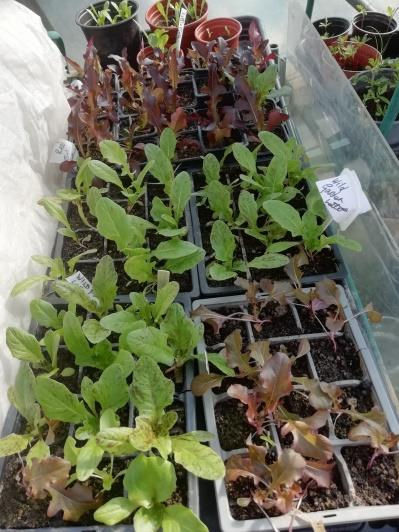
We value kindness, treating one another well; community, regeneration, nature, play, village, deep health. We’re going to have a set up weekend there 6-7 April 2024. If this seems very interesting and very aligned with your family contact Tallula 07595 395 373
On the rest of the Land we have been monitoring the water in the Bidwell Brook at the bottom of the field, as part of a CIS Project.

In the vegetable garden the seedlings are all sprouting . We have put an extra water capacity to get us through the dry after this very very wet spell. We have two barn owls at the moment so hoping for babies again . The wild flower Meadow has its first flush of flowers. spring has definitely sprung with all the Blossoms in the hedge row & Orchard blooming.
The nettle workshop at Half Moon Field, mentioned in the last newsletter has been postponed till next year
News from Apricot Centre
New Trainees and Frosty Prunes

We've welcomed three new trainees to the farm, diving headfirst into their Level 3 in Regenerative Agriculture. It's been quite the initiation, with frosty mornings seeing us pruning fruit trees amidst snow and ice. Despite the chilly environment, we've managed to prune around a thousand trees, ensuring they receive the attention they need for robust growth.
Innovations in Propagation

In our propagation tunnel, we've implemented a compost hot bench to aid in germinating the multitude of seeds we're sowing. While the initial setup was intended to utilize livestock manure as a heat source, we encountered challenges with ammonia concentration affecting seed sprouting. We're currently rethinking our approach, considering alternatives like charcoal and ash. In the meantime, we've expanded our use of polytunnels to accommodate more benches for seed propagation over our green cover crops.
Flour Mill Revival
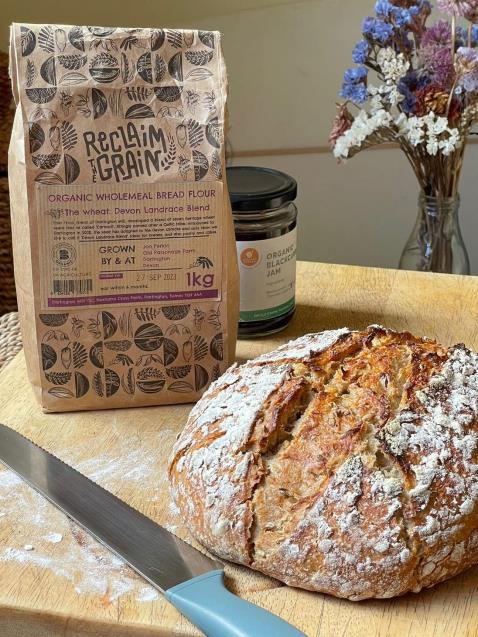
Exciting news from Dartington Mill - our flour mill is back in action! With a new team member on board, we're now producing both white and wholemeal bread flour for our veg round, market stall, and wholesale. The current blend, a cornovii mix grown locally, is perfect for a variety of baked goods. As the cold weather sets in, it's the ideal time to indulge in some comforting baking and perhaps a slice of cake or two!
Microbiome Garden at Apricot Centre

We're thrilled to announce that the 'Microbiome Garden', initially designed for the Chelsea Flower Show, will find its new home at Apricot Centre in May! Supported by Bowel Research UK, this garden explores the connection between gut health and overall well-being through rewilding diets and fostering a deeper relationship with nature. With the garden's arrival, we aim to expand our outreach and delve into exciting research possibilities, thanks to the generosity of Bowel Research UK and Project Giving Back.
from the Wholistic Living University

Dear kindred nature lover,
If you grow your own veg and want to learn to grow more, this announcement is for you! I am sure you might even know a few people, who have the same aspiration. If so, pass on this announcement to help more people to secure their local food supply by growing their own or in a community garden. So looking forward to sharing ways to increase the growing season to grow more of our own food. What if we could add 4 months to our limited growing period here in England?
Find out how on the 6th April in Michael Hall School, Sussex.
See flier (left) for more details.
Be the change, Hans-Günther
Biodynamic Produce for Sale
BIODYNAMIC BEEF
from our freezer from our biodynamic South Devons, various cuts and joints but all the sirloin, rump and fillet steaks have been sold.
Please contact Tristan Bertie 07836 591 847 Lordswood Churchstow Kingsbridge or email me at lordswood.biodynamics@btinternet.co
GREENLIFE SHOP, TOTNES 01803 866738
Some Demeter products, Biodynamically grown vegetables in season and Seed Cooperative organic open pollinated seeds.
TEIGN GREENS
Teign Greens, Oxen Park Farm, Lower Ashton, Exeter EX6 7QW
– in conversion to BD. Contact Tim Dickens for availability of produce. www.teigngreens.co.uk email teigngreens@gmail.com
VEGETABLES FROM APRICOT CENTRE/ HUXHAMS CROSS FARM
We deliver weekly vegetable bags or boxes. The boxes contain Huxhams Cross Farm own produce as well as several small BD and organic growers who will be providing vegetables at certain times of the year . We can add eggs, flour fruit and water. You can order online at www.apricotcentre.co.uk
BD FRUIT JUICE CORDIALS for SALE
All with organic apple juice
Contact Derek Lapworth on 01364 644010
HEMP AND OTHER TINCTURES (all homemade)
The CBD tincture is made by Nick Read from hemp grown at Dartingtom and is the only UK organically grown CBD.
Please see website for costs and purchasing information. englishhemp.co.uk
South West Biodynamic Group
The South Devon Biodynamic Group’s purpose is to inform those interested in BD methods of gardening and farming of what is happening in the area. As a member you receive
A quarterly newsletters and seasonal gatherings where we make the biodynamic preparations. These are then made available to members free of charge.
A library of Biodynamic books kept at The Apricot Centre.
We charge an annual subscription of £15 per person and £20 for a couple. We offer a concession of £10 a year if needed.
Sort Code 20-60-88 Acc. No. 13509680 South West Biodynamic Group
Preparations are available from Whites Farm, Lower Dean, Buckfastleigh TQ11 OLS
Contact Denise deniselaurenj@icloud.com
If you wish to join, please contact Diana White (Treasurer) at dianawhite35@hotmail.com
or write to 12 Apple Wharf, The Plains, Totnes, TQ9 5QL


Comments