Autumn 2020 Southwest Biodynamic Group Newsletter
Updated: Apr 14
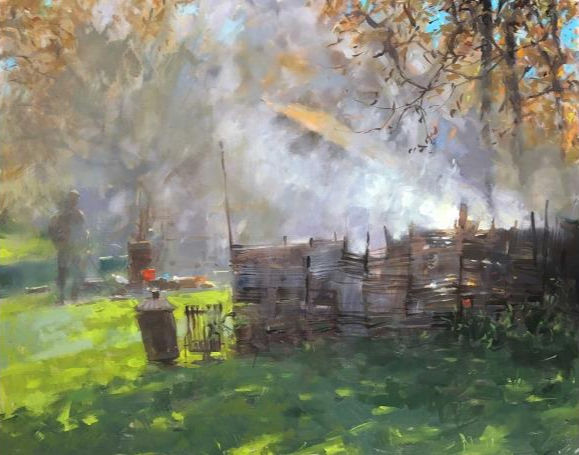
DIGGING
by Edward Thomas
Today I think
Only with scents, - scents dead leaves yield,
And bracken, and wild carrot's seed,
And the square mustard field;
Odours that rise
When the spade wounds the root of tree,
Rose, currant, raspberry, or goutweed,
Rhubarb or celery;
The smoke's smell, too,
Flowing from where a bonfire burns
The dead, the waste, the dangerous,
And all to sweetness turns.
It is enough
To smell, to crumble the dark earth,
While the robin sings over again
Sad songs of Autumn mirth.
News from Huxhams Cross Farm
It has been one busy and changeable Summer, hot and cold, wet and dry and that’s just the weather!
We have just started to put up our two new polytunnels which will be planted with apricots and passion fruits, which will add to the fruit that we supply directly to our customers, this year this included our very own home grown melons which were very well received… they may have been little but they were mighty flavoursome.

The increase in demand for our amazing White Leghorn chicken eggs has also seen a few new additions to our team - mainly 65 new chickens … all of them called Clare. It would take too long to name them all and they look very much the same! We have a brand new chicken house to house Clare and her sisters and hoping they will start producing a regular supply of eggs soon.
Clare and her sisters are not the only ones who have a new home in process, Bob’s cabin in Higher Week has gone to planning, it has been designed by a former student of The Apricot Centre Permaculture Design Course and is beautiful in its simplicity and design. Bob will be gathering statements and letters of support when the time comes for this beautiful building which will allow a farmer on the land 24/7 which as we get busier is more and more important.
We are saying farewell to our apprentices this year, Elizabeth, Freddie and Rachel have been with us since October 2019 and have been absolutely phenomenal in times of world crisis. They were right there to pick up the areas that needed them and have flourished and this was so important in order for us to meet the Covid 19 demands. We will hopefully be keeping Elizabeth and Rachel as part time members of staff at the farm whilst Freddie goes on to enjoy an Autumn of grape picking. We wish them all the best with their futures in Biodynamic and Organic farming. With one group of apprentices journeys moving forward we are welcoming another 3 to the farm, Clemency, Mark and Steph will be joining us from October and we are very much looking forward to watching their own journeys unfold over the next year.
Having apprentices on the farm has meant that we have been able to take on new markets as well as restart the Friday Market in Totnes. You can now find The Apricot Centre Biodynamic and Organic produce at Newton Abbot Good Food Market as well as Totnes Good Food Market once a month on a Sunday.
News from Apricot Centre Wellbeing Service
The Well-being Service at the Huxhams Cross Farm is as busy as ever as we continue to support Looked After Children and their families through our mental health service. We have seen an increasing number of families being referred to us over Covid 19 and are in the swing of providing face-to-face and online support to them.
As well as our therapeutic work we have also started some new projects at the farm. Our nature connection work to support well being and mental health has started again with three new projects.
The Apricot Centre at Huxhams Cross Farm and Farmable started to work together in August this year. Farmable is an innovative charity who support Veterans, Emergency Service Personnel and their families to resettle after suffering trauma by providing a therapeutic programme of rural and craft skills. We were excited to partner with Farmable and help another part of our local community to reconnect with nature whilst improving their emotional and mental health whilst sharing our rural skills and agricultural skill knowledge in return we have some much needed support and help.
One project that the Veterans from Farm able have helped us with is our Farm Club and Woodland area. Since lockdown started in March, many of our wilder areas of the farm that we use for our Woodland Wellbeing days and our Farm Club became even more wilder. Although fabulous for biodiversity and our wildlife we needed to tame the wild areas a little so that little ones didn’t have to tackle the sky high nettles and swarm of brambles to get to their mud kitchens and bushcraft areas.
Grant Awards
The Apricot Centre has been awarded funding from The National Lottery Awards for All for our Free - Woodland Well-being Project which helps adopted and looked after young people and their families affected by stress, anxiety and mental health issues due to being adopted or looked after, by actively encouraging them to reconnect with nature, find their voice, rediscover the art of play and become a part of a community of like-minded people.
We have also been awarded a grant from Imagine This Partnership for our Free - Woodland Wellbeing Root to Rise Project using the Orchards at Lupton House we will use nature connection activities and therapeutic support to help prevent suicide in young people by helping bring people together and build strong relationships and mental wellbeing support through a range of therapeutic and nature based activities.
Our Farm Club for Home Education Families has started again in September connecting children with nature, food & the farm. Children that have been attending the farm are developing a passion for the environment through farm and woodland based activities including how to look after cows and chickens, the wildlife on a farm and about planting and harvesting fruit and vegetables.
Training Courses

We have started our training courses again with our first Permaculture Design Certificate taking place last weekend (12th and 13th September). Participants learnt about what is permaculture and how to start using it to design gardens, allotments and land. With a lot of Covid 19 guidelines and safety measure in place we were blessed with two beautiful days to begin our year of courses since they were all cancelled in March.
We are taking booking for our new courses Introduction to Agroforestry, Introduction to Biodynamics and Economics of Permaculture now, for more information visit www.apricotcentre.co.uk/trainingcourses
We are very excited about the new year ahead with lots of new developments and we very much look forward to a time when we can gather again for stirrings and preparations and socials please keep in touch via Facebook, Instagram and our Website www.apricotcentre.co.uk
News from Velwell Orchard
Velwell Orchard remains closed to the public. We have been supplying a limited number of veg boxes and have a small team of regular helpers for the garden. We aim to reopen in the spring. If you want to keep up to date, sign up to receive news by email on our website: Velwellorchard.Org
We are still supplying all of the biodynamic preps which we can send by post or you can arrange to collect.
Seasonal Gatherings
The Southwest BD Core Group are very sorry that once again we had to cancel our seasonal gathering at the Apricot Centre. Marina, the farmer, will still make the preparations on the course she is running (which can still go ahead as it comes under the Education category).
The government has said that the recent more stringent ‘rules’ are likely to be in place until March. Let’s hope that we will be able to hold some sort of Spring gathering.
A Need for Seed
by Tess Stone
Seeds are the start of life. Seeds are also the end of life for many plants. They are the crucial link in the continual cycle of a plant’s life, providing it perpetual propagation (reproduction). This is of particular importance for annuals and bi-annuals - setting seed every year or every other year is a necessity for their continuation and existence. Many of our plants in the vegetable garden fall into one of these two categories, but before they can flower, be pollinated and set their seeds for the next year they are often uprooted before being given the chance to do so. This represents a massive missed opportunity. By allowing annual vegetable plants to complete their full cycle, not only do we have the potential to build seed security for ourselves and seed swap with others, we can also begin to fully understand and connect with our plants.
Seed scarcity only happens when we take a plant before it’s completed its cycle. Towards the end of its life many vegetables produce hundreds of seeds to ensure continuation. By allowing even some of a plant to reach this stage, makes sure you, neighbours and friends will have seeds for years to come. This can often be done, while being able to enjoy our plants as a food source! Cabbages for example, will still go on to flower (and seed!) if just the head is cut rather than digging up the roots as well. This is because the head of a cabbage is its apical (primary) bud, making it the point to which the majority of the plant’s energy is directed. Removing this promotes a hormone response in the side buds stimulating them to develop. This results in lots of little cabbages over winter, followed by flowers in spring and seed in summer, all of which can be eaten and enjoyed!
If being a ‘seed saviour’ to your friends and families isn’t enough, these flowering buds, flowers and young seed pods of kale and radish families can bring beautiful colour or a punch of flavour to your spring salads! While those left on the plant will be adored by bees, butterflies and other pollinators allowing them to sustain themselves and their young. This, in turn, will encourage seed and insect loving birds into your garden, providing you with joyous company, fertiliser and pest control!

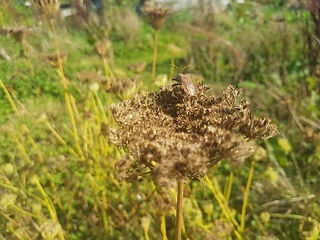
Plant’s diverse ways of dispersing their seed is extensive and ingenious and has been a continual fascination since I was a child (I believe we all have this). There is a wonderful playfulness it brings to young people… the dandelion clock to blow and poppies and aquilegia to rattle and disperse unwittingly! Another early memory is the loud popping of gorse pods on warm days along the coastal path in Pembrokeshire on family walks. Some have offered us inspiration to mimic such as burdock burrs and Velcro! The different form these seed heads have, display an opportunity to have a patchwork of patterns and an opportunity to discover the families plants belong to.
My saving started more earnestly 20 years ago, during my RHS course, when guidance on seed saving was given, it is all common sense really, but having the tips creates confidence and means you can get going. Some of the tips and guidance is given at the end of this article! I find I can get 90% plus germination rate from the seed I save and comes up faster than ones brought from companies.
Seeds also adapt to your soil and climatic conditions so growing and sharing locally means you will have healthier more resilient plants.
Collected tree seeds and berries from native shrubs often have to go through an animal to stimulate germination (scarification) or enjoy a cold winter. Autumn walks are a perfect time to collect tree seed. It’s interesting to see that the voles have decided they needed to re-plant the oaks and hazel elsewhere or eat them and I find hazel and oak coming up alongside channels and pathway routes the voles and mice have made in the long grass.
I hope to have a good storage system in place later this year for my seeds so they are catalogued well and can offer swap days and a postal service much like Derek Lapworth has co-ordinated this year for the SW Biodynamic group.. Hopefully local, community projects like this will bring people and plants together and bring respect and connection with all nature (Plants, creatures and us!).

Tips for seed saving
Wait for the seed to be mature on the plant
Consider the Biodynamic calendar and the moon phases – I’m only just getting my head around it all so hopefully someone can confirm to collect on a harvest ascending moon!
Collect on a dry afternoon
Use paper bags or old envelopes to cut the seed head straight into (Or another vessel that will catch the whole seed head or delicate tiny seeds, as appropriate. If seed heads are put in upside down then seed can fall out in its own time!
Label your envelope with what you have collected along with the day/date
Store in a dry place away from mice and aim to have an even temperature! (I have got away with storing some in a sunny porch shelf and the advantage of breathable containers means it will cope with changes in temperature and humidity.) Jars are also good to store in as they keep hungry visitors away but if there is any humidity in them then you are at risk of losing them all to mould or mildew. (Real seed advise using rice to absorb more moisture but I have not had to use this method) I am fortunate in having an old apple store which comes in very useful for drying herbs and seed away from of sunlight in a garden room.
There are various way to catalogue your seeds…. Use what works for you.
Stony Orchard
Stony Orchard is between Honiton and Sidbury. it is a combination of small fruit growing areas, nuttery and copes, grassland/wildflower meadows, heathland, rewilding areas, “A leaf Garden” of mainly herbs, A new “spiral Garden” mainly for medicinal flowers and pollinators, a few small polytunnels for growing/overwintering, chickens and an evolving undercover area of interlocking sheds/small barn/workshops which houses/will house the library, apothecary and seed store. Much still needs finishing touches! An acre of former market garden is now going to be a home to the Food and Forage Garden Project where a Forest garden is being created (hopefully much of it with teenagers when restrictions are lifted) and aims to linking people and plants in harmony with nature by involving communities to tend the soil, compost and plants and demonstrating how we can grow and eat nutritionally packed wild, home grown and self-fermented foods for a healthy immune system and wellbeing.
Things in the pipeline are water - springs, road run-off , and roof collection overflowing into ponds, swales and wetland garden; a kiln shed for the Fred Olsen Wood-fired kiln, also under constructed for an Art student in lockdown, A cosy workshop space awaiting insulation with hempcrete to create a library of nature, growing/permaculture, rural skills and spiritual growth books.

The project is growing organically as it builds links and connects with other community groups, such as local schools to support staff in Nature based creative and growing activities, Honiton Community College to offer outdoor learning of practical/rural skills, land management in harmony with nature and growing and Honiton Health Matters and “I belong” alliance to develop nature based programs for wellbeing. Forging good relationships with neighbouring farmers/individuals and local business has been particularly valuable and makes for a good community hub for locals to help and support each other. There is an abundance of wildlife, natural food and talent when we care for what we have around us, in our local environment and community.
During this strange period of staying at home with social distancing it has been difficult to move forward on projects. Life on the land has taken a slower pace with only family members to help. But we soon welcome Bee Wild to Stoney Orchard, encouraging people to grow more plants for our declining wild bee and insect populations and let the wild edges into our gardens and lives. Bee Wild will be offering creative opportunities to be involved with learning about growing pollinator plants from seed and the life cycle of bees, making log hive habitats and bee skeps, exploring bee trails and letting our own wild sides to emerge from this time of reflection. The new workshop space will offer a small hub for writing together, women’s circles, creative thinking and even for sewing groups to meet. There are other programmes for young people that have had to be put on hold at the moment to offer camping/walks/connecting to nature through creative arts.
Many of us have been through hard times in one way or another and I feel there is real value in coming together to pool resources, knowledge, skills and support. And to work with each other on a future way to live, we each bring a seed and if it falls in the right conditions it will set root, flourish and blossom!
- Tess Stone
Teign Greens
at Oxen Park Farm
It’s been an uncertain and challenging year in so many ways, but through the difficulties have emerged opportunities here at Oxen Park Farm and On The Hill CIC.
On Tuesday 29th September we officially launched ‘Teign Greens’, a community supported agriculture (CSA) scheme that hopes to supply up to 150 local households with fresh, biodynamic vegetable boxes each week, all year round. Our vision is to produce and provide sustainably grown and affordable local food, while providing opportunities for families to get involved with all elements of biodynamic growing.
At present we are doing around 35 regular boxes, all picked up at the fair gate by members who live less than three miles away. I hope we’re showing people in the Teign Valley what a truly local food system can look like. With a bit of luck we hope to increase this to 50 boxes before the end of autumn.
The CSA project is a partnership between my partner Holly, myself and Jo Clarke, who owns the farm with his wife Tina. While Holly and I will run the scheme day to day, we’ll be guided by Jo’s decades of experience growing and teaching how to grow biodynamic vegetables and he won’t be able to resist the odd shift on his Massey Ferguson 135. We really hope that Teign Greens will fit well into the wider ecosystem at Oxen Park Farm, including the young people who come to learn as part of On The Hill, and other new projects in the future.
Each Wednesday, all of our surplus vegetables are taken to the amazing Teign Valley Larder, where it can be taken by anyone for free, or for a donation the larder if they feel they can afford it. So far we’ve distributed hundreds of kilos of veg to local people this way, as well as via our affordable vegetable boxes.
After a brief pause at the midst of lockdown, we are now open to volunteers and they play a key role on the farm. Through Autumn and Winter our regular volunteer days are Tuesday, when we harvest and pack the veg boxes, and on Saturday 10th October we hope to have our Squash harvest volunteering day, should Covid regulations allow.
As Jo wrote in the last issue of this newsletter, the launching of ‘Teign Greens’ on the land here at Oxen Park Farm is part of his and Tina’s vision to open up the farm to as many people as possible through the different organisations based here. The pandemic has meant there hasn’t been the laughter of visiting children at ‘ On The Hill’, but we all hope this will be different next summer. The kids who do come and stay here will get involved with all elements of planting, weeding and harvesting all our wonderful veg.
I really look forward to meeting many members of the Southwest Biodynamic Group when things are more settled.
- Tim Dickens
TeignGreens
Aston Park Farm, Lower Aston, Exeter EX6 7QW


Spiced Pumpkin Pie

A recipe from Wendy Cook’s
‘The Biodynamic Food and Cookbook’
published by Clairwiew
Required
A deeply flavoured Hubbard type of pumpkin
Loose bottomed flan tin
Ingredients
for the pastry base
10 oz/ 275g 82% pastry flour (or 8 oz/225g white flour sifted with 2oz/50g 100% flour)
6oz/175g cold butter, cut small
2oz/50g icing sugar
3-4 Tbsp ice cold water
1/2 tsp sea salt
Ingredients
for the filling
2 lb/900g cooked and drained orange pumpkin flesh, preferably put through a food mouli to have a smooth texture
6oz/175g sugar (half unrefined caster sugar, half Rapadura, unrefined molasses sugar)
4 large eggs
1/2 tsp sea salt
1 tsp ground ginger
1/2 tsp freshly grated nutmeg
1 Dsp marmalade
1/2 pt/275ml double cream
1 tsp sea salt
1/2 tsp allspice
1 tsp cinnamon
Grated zest of 1 orange
Method
Pre heat oven too 200° C / gas mark 6
Sift flour, salt and icing sugar into a large bowl.
Rub in the cold butter lightly using fingertips until mixture resembles fine breadcrumbs.
Add just enough cold water to hold the dough together – the more water you add, the less crisp your pastry will be, so go carefully at this stage. Wrap the ball of pastry in cling film and allow to rest in the refrigerator.
Meanwhile make the filling. Combine the pumpkin puree thoroughly with the other ingredients.
Remove the ball of pastry from the refigerator and roll out fairly thinly and line the flan dish. Crimp the edges and prick the bottom with a fork.
Pour the pumkin mixture into your pie crust.
Bake for 10 minutes to set the pastry, then turn down to 180° C / gas mark 4 for 30 minutes. It may develop cracks in the top, but you can pipe some whipped cream in to hide them when the pie has cooled.
News from The Farm at Camphill Devon Community
at Hapstead, Buckfastleigh
Tobias Goulden has taken over the tenancy of the farm at Hapstead. He intends to apply for organic certification on two years’ time and then a year after that for Demeter status.
Hopefully we will have more news of his plans in the next newsletter.
Produce for sale
Vegetables from Huxhams Cross Farm
(the Apricot Centre)
We deliver weekly vegetable bags or boxes. The boxes contain Huxhams Cross Farm own produce as well as several small BD and organic growers who will be providing vegetables at certain times of the year . We can add eggs, fruit and water. You can order online at www.apricotcentre.co.uk. Enquiries to Bob Mehew: 07507 841 158 or bob.mehew@apricotcentre.co.uk
Greenlife Shop, Totnes
01803 866738
Some Demeter products, Biodynamically grown vegetables in season and Seed Cooperative organic open pollinated seeds.
Teign Greens
Oxen Park Farm, Lower Ashton, Exeter, EX6 7QW – in conversion to BD.
Contact Jo Clark, for availability of produce. www.teigngreens.co.uk
Fruit Coridials from Chapel Stores
We buy in or pick fruit from biodynamic growers wherever possible. We also use some fruit from other sources, all free from pesticides, and some picked from hedgerows away from main roads. Only apple juice and apple concentrate (all organic) are added to the fruit . A small amount of lemon juice is added to the elderberry and sloe juices. The concentration is approximately 7:1 when water is added.
Elderberry
Elderberry is well known for its antiviral properties. It is commonly used in a combination with vitamin C to treat respiratory illnesses like the common cold and flu. It is best used as a prophylactic to help prevent illness, not necessarily to be taken during illness.
Sloe (Blackthorn)
Sloe is the ‘king of the fruits’. It is rich in vitamin C, potassium, calcium and magnesium. It can help with digestion and breathing disorders.
Rosehips
These are traditionally used for their anti-inflammatory and pain releasing properties but are also thought to be helpful with heart conditions by lowering cholesterol and blood pressure.
PRICES – 2020
All bottles are 500ml unless stated otherwise
Elderberry £5
Blackcurrant £6
Bullace £5
Sloe £6
Rosehip £5
Mixed Wild Fruits £6
Redcurrant and Raspberry £5
Elderberry with Star Anise 330ml - High concentration £6
Blackberry £5
Plum £5
For further information and orders please contact: Derek Lapworth, 10 Chapel Street, Buckfastleigh, Devon, TQ11 0AB Tel: 01364 644010 Email: dereklapworth@gmail.com
Southwest Biodynamic Group
The South Devon Biodynamic Group’s purpose is to inform those interested in biodynamic (BD) methods of gardening and farming of what is happening in the area. As a member you receive:
Quarterly newsletters and seasonal gatherings where we make the biodynamic preparations. These are then made available to members free of charge.
A library of Biodynamic books kept at The Apricot Centre.
We charge an annual subscription of £15 per person and £20 for a couple. We offer a concession of £10 a year if needed.
Preparations are available from Velwell Orchard.
Please contact Jeremy Weiss 07962 432317, velwellorchard@yahoo.co.uk
If you wish to join, please contact Diana White (Treasurer) at dianawhite35@hotmail.com or phone 01803 473551


Comments